


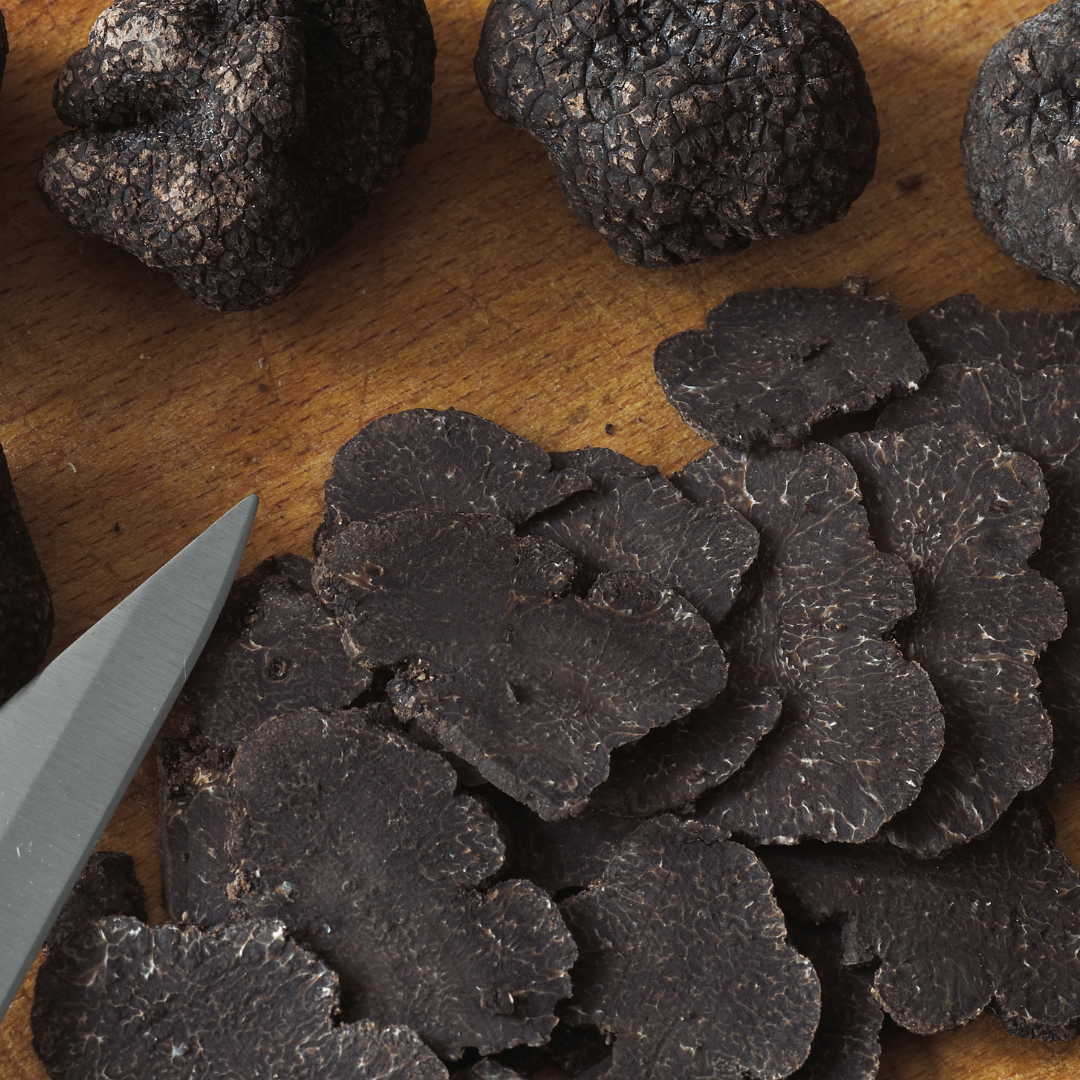
The Black Diamond: Discovering the Black Winter Truffle
The Tuber melanosporum, commonly known as the black truffle or Norcia truffle, is the crown jewel of the winter harvest. Unlike its white counterpart, the black winter truffle is known for its resilience and its ability to develop deeper, more complex notes when exposed to gentle heat. This makes it a favorite among chefs who want to infuse the very essence of the earth into their sauces and proteins. When you purchase our fresh truffles, you are receiving a product that has been hand-selected by expert hunters and their truffle dog partners in the pristine forests of Italy.
Why Are Truffles So Expensive?
Black winter truffles grow in a symbiotic relationship with specific host trees like oaks and hazelnuts, and they cannot be mass-cultivated, meaning that every single truffle is a wild find. The black truffle price is also influenced by the short harvest window (December to March) and the labor-intensive process of unearthing them without damaging the delicate mycelium.
Cooking with Black Truffle
To get the most out of your purchase, we recommend using a wooden truffle shaver. Unlike the white variety, which is almost always served raw, the black winter truffle can be slightly warmed. You can grate it into a warm butter sauce or infuse it into a slow-cooked ragù. In the perigord truffle variety, expect notes of dark chocolate, damp earth, and roasted nuts. For an extra layer of luxury, pair it with our white truffle butter during the finishing stage of a risotto.
How long does a fresh black truffle last?
If stored correctly in a glass jar with paper towels in the fridge, it will remain excellent for about 10-14 days.
Should I peel the truffle?
No, the skin (peridium) is full of flavor. Simply clean it with a soft brush and a tiny bit of water if necessary.
Can I freeze fresh truffles?
While possible, it changes the texture. We recommend consuming them fresh or preserving them in butter.


